


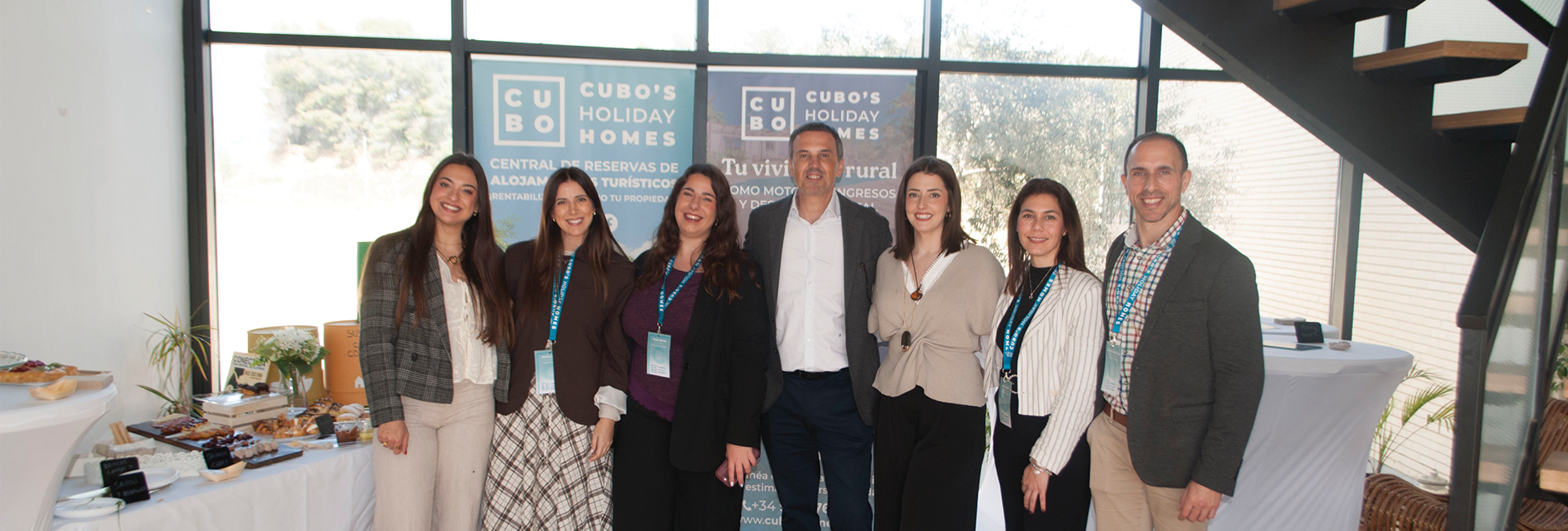
Last week, we gathered rural home owners, industry professionals, and tourism experts in Cerralba (Pizarra). The goal was clear: to explain how a rural house in Málaga can become a stable source of income when managed professionally.
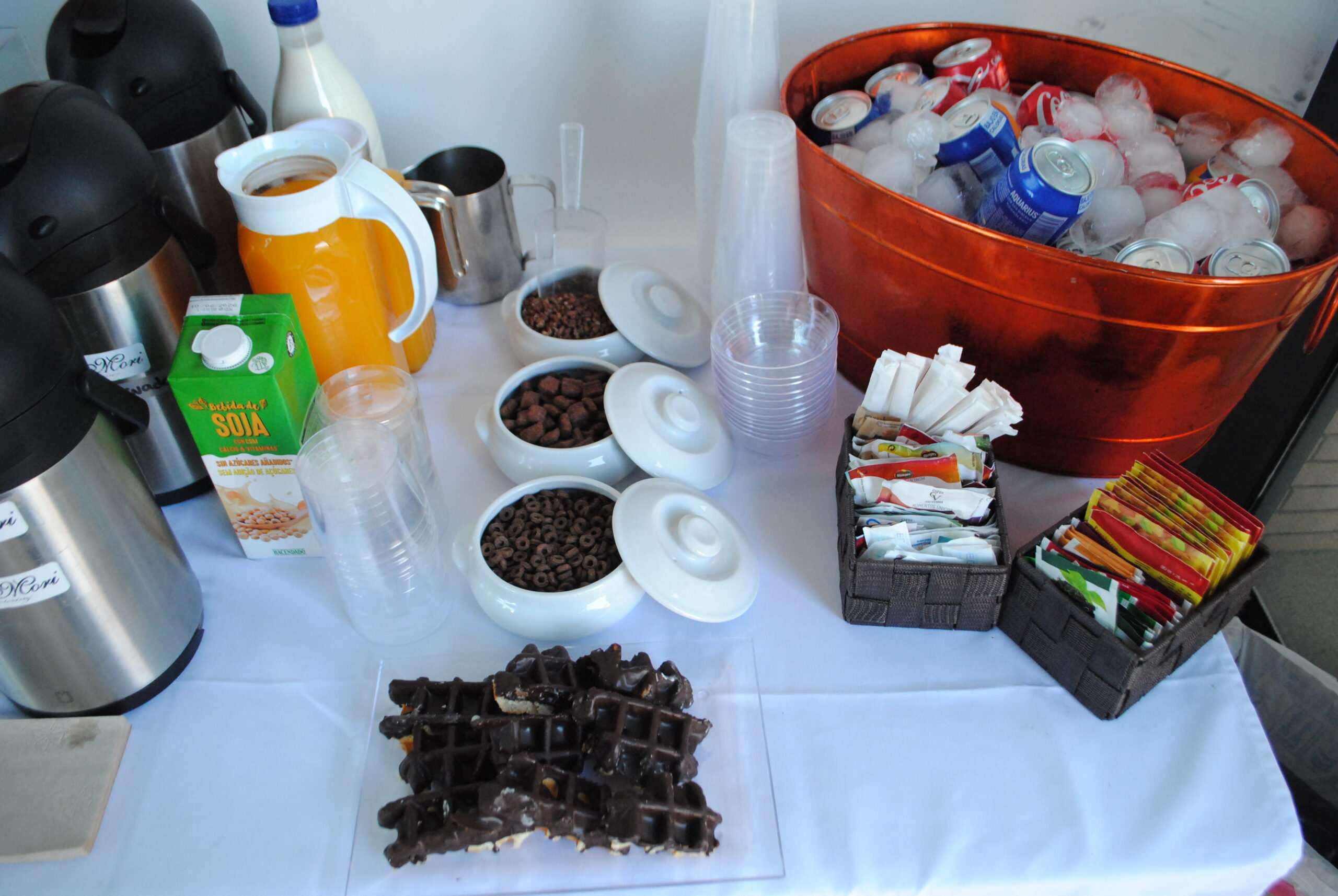
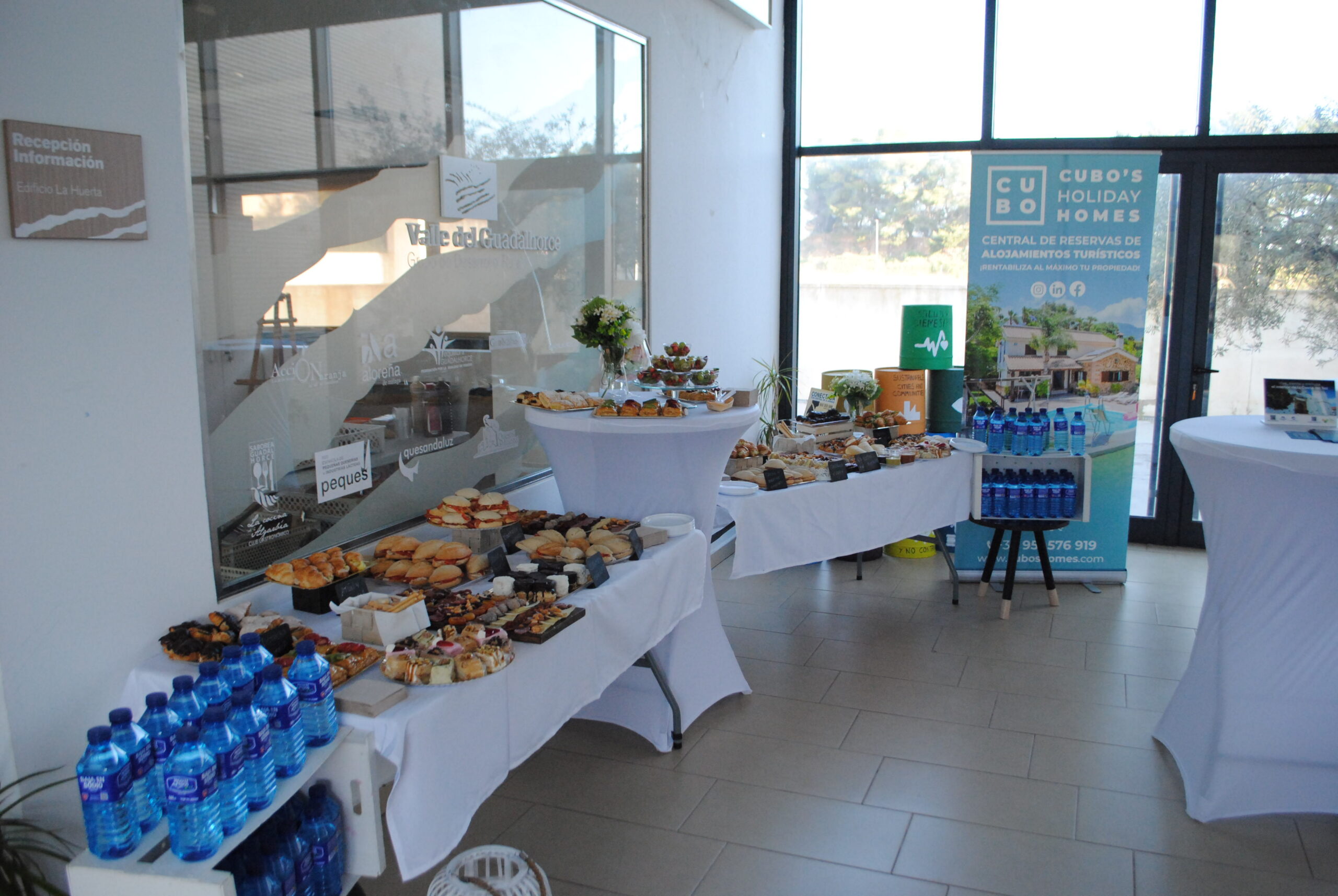
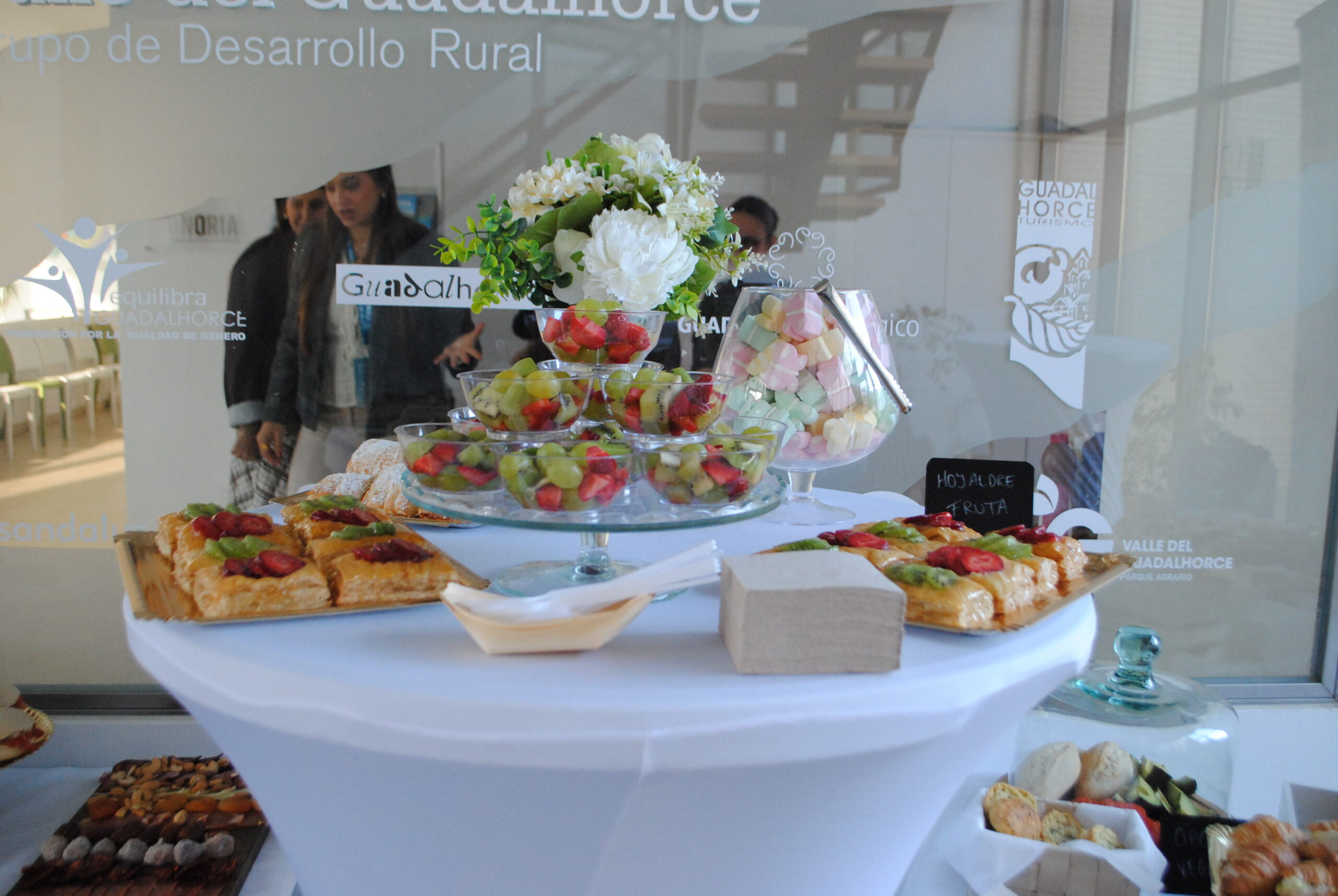
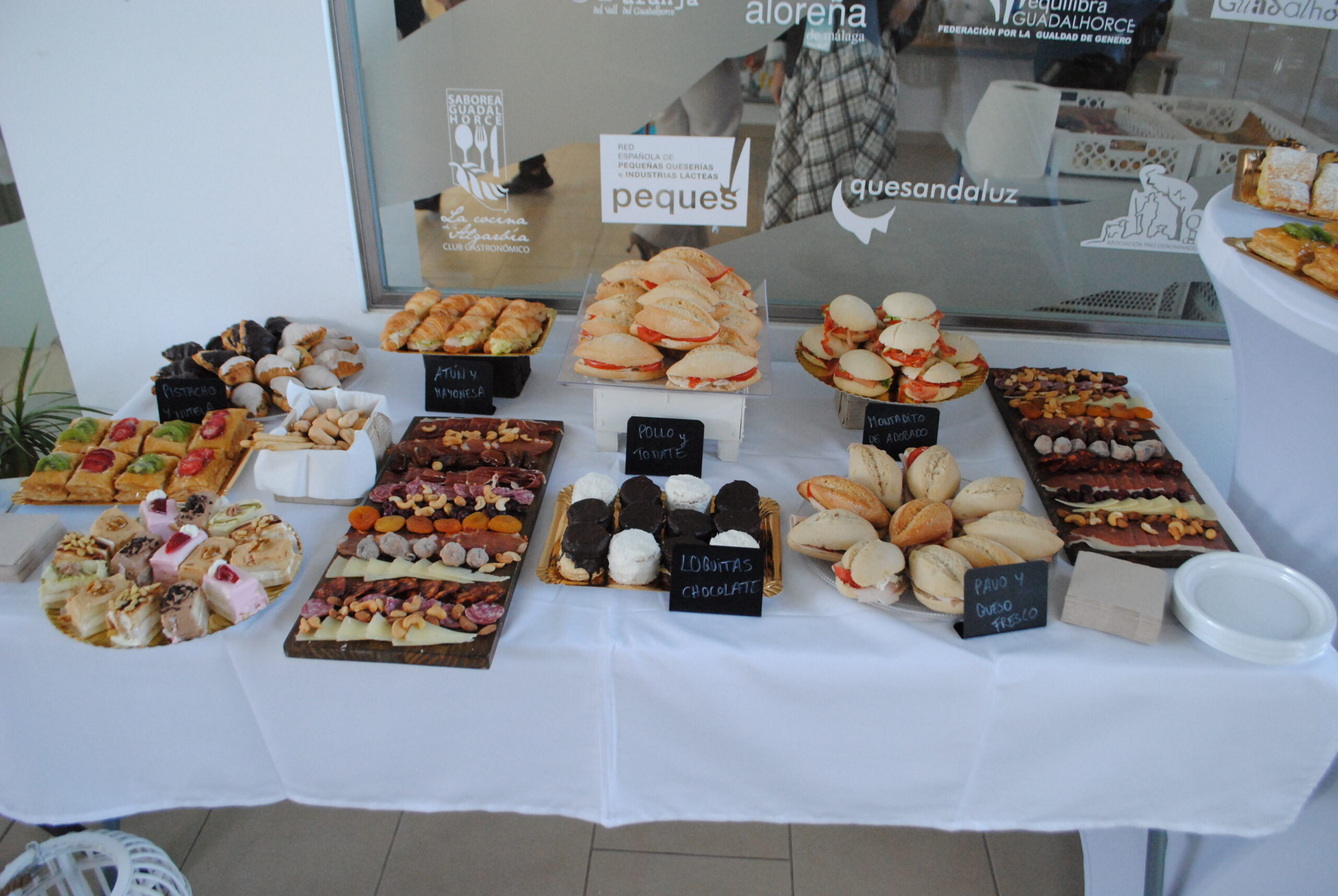
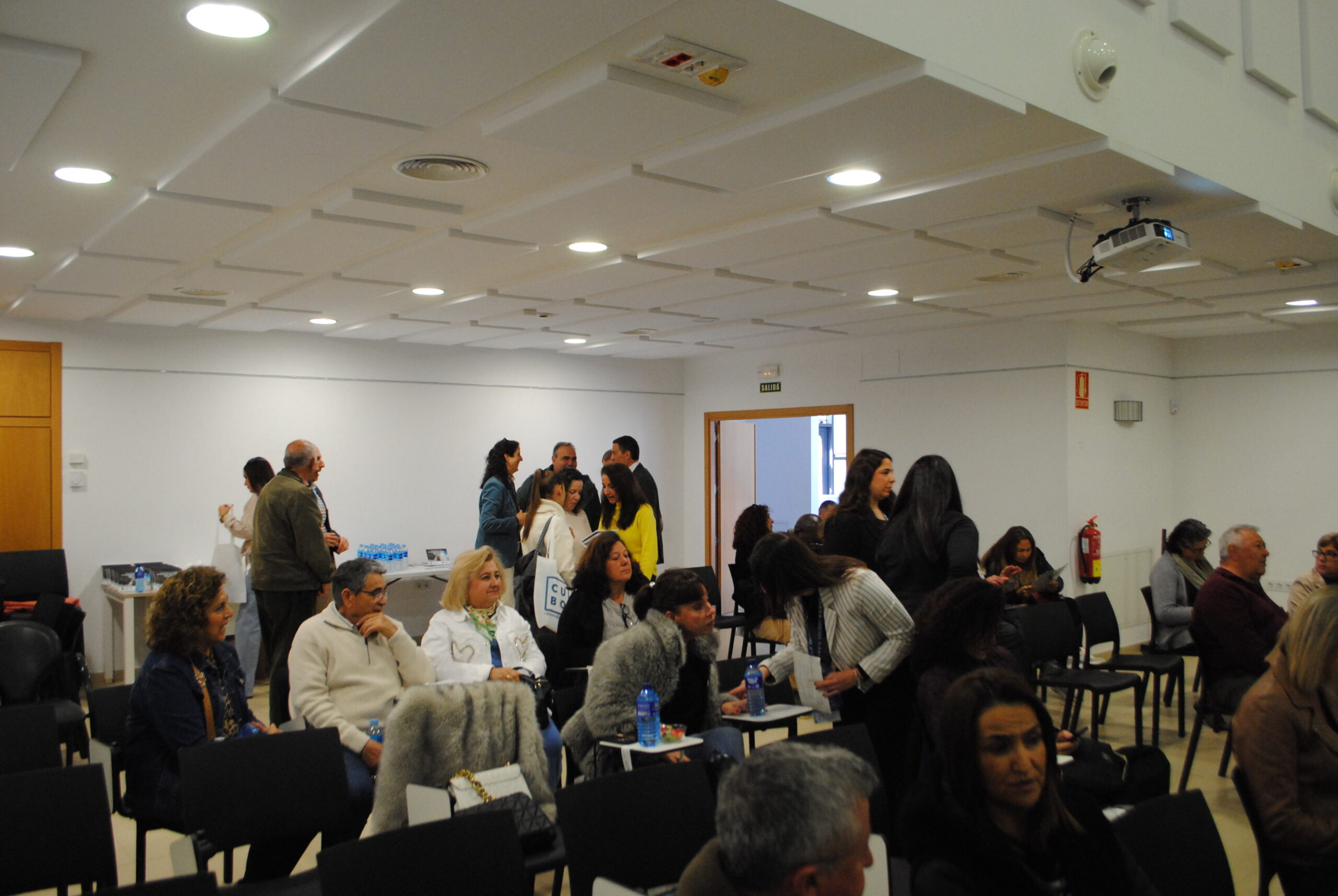
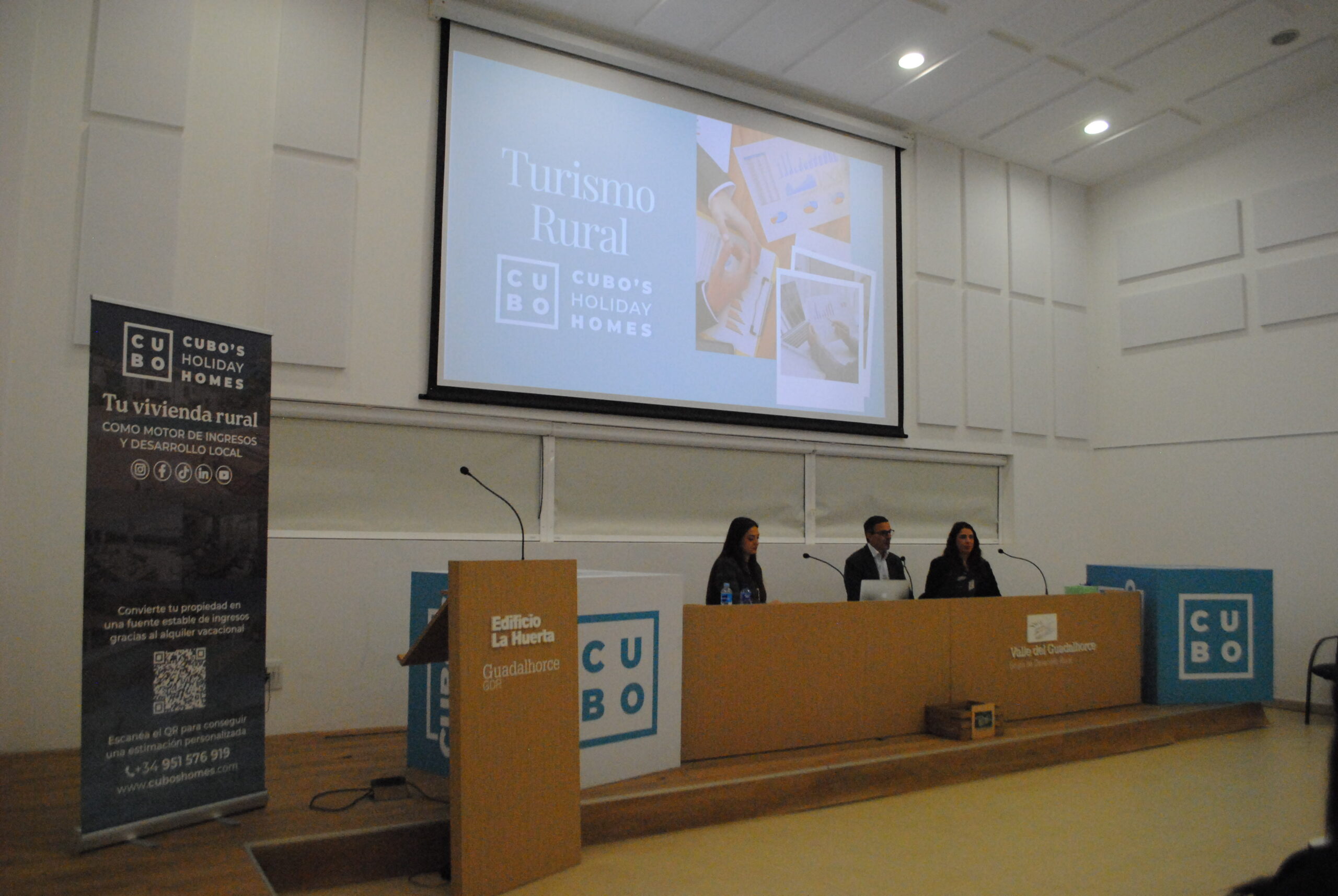
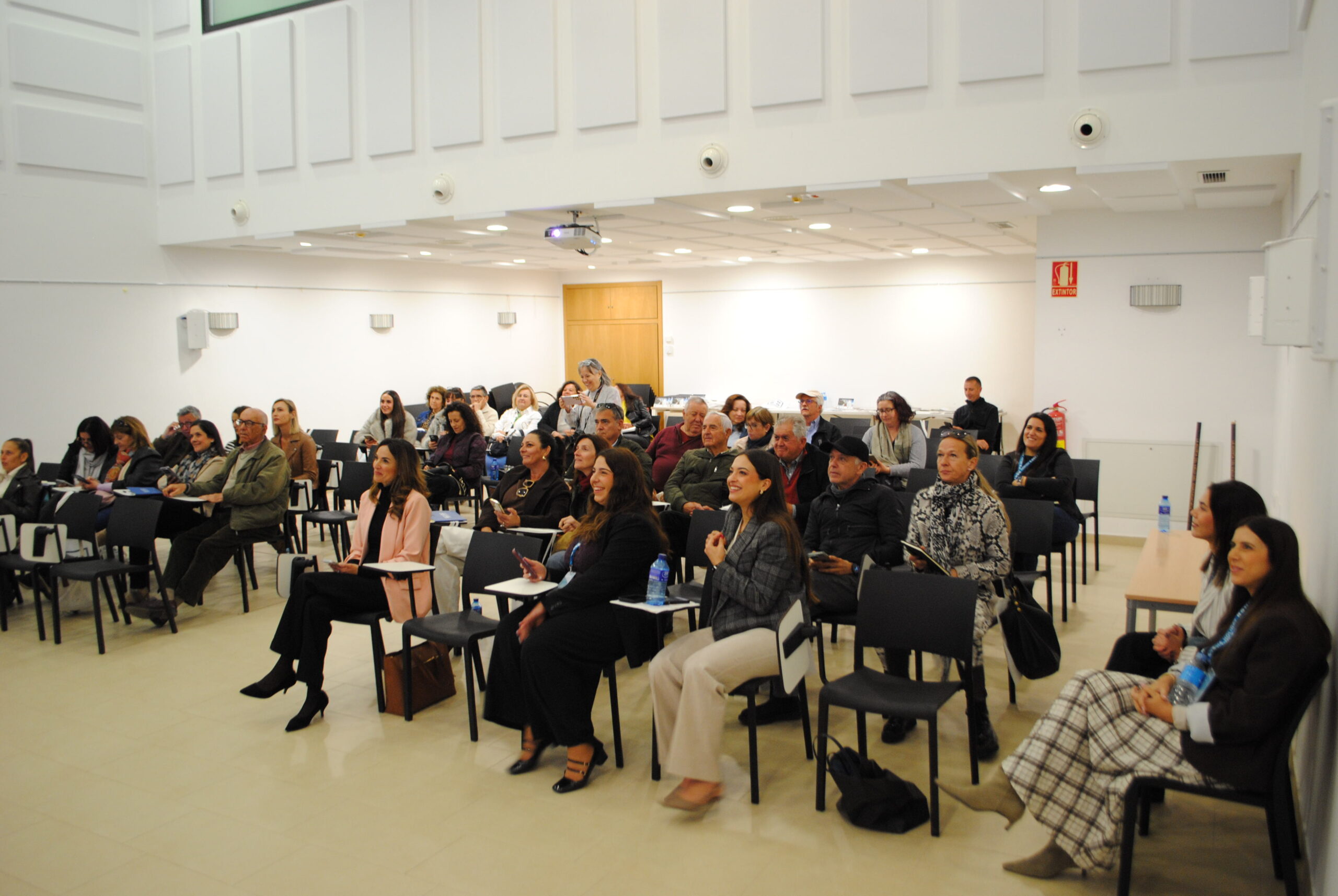
The event, organized by Cubo’s Holiday Homes, took place at the Edificio La Huerta, headquarters of the Valle del Guadalhorce Rural Development Group. The day kicked off with a highly varied and carefully prepared breakfast. This moment allowed attendees to discuss the reality of rural tourism in the area. Afterward, it gave way to a morning full of ideas, data, and useful strategies for owners.
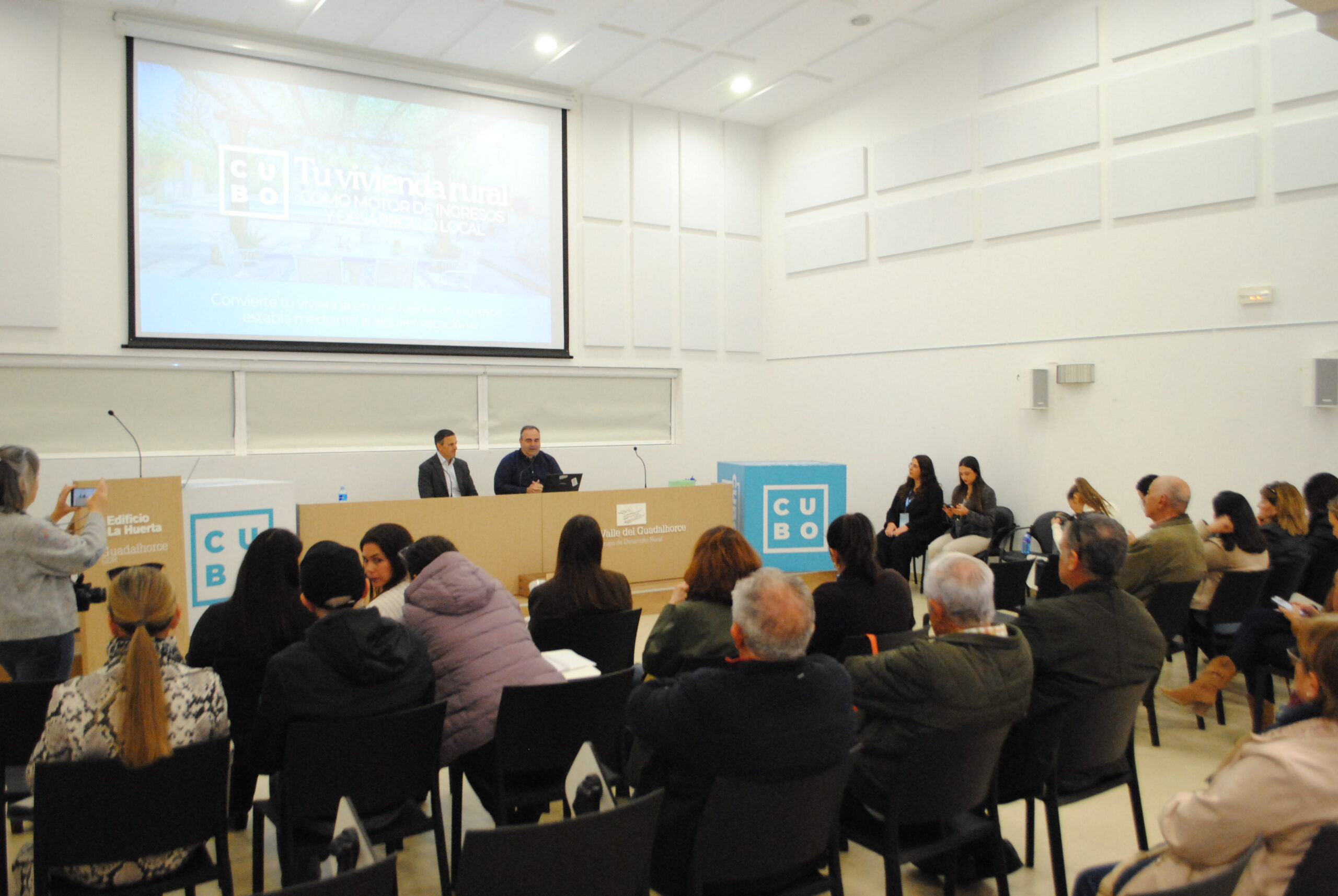
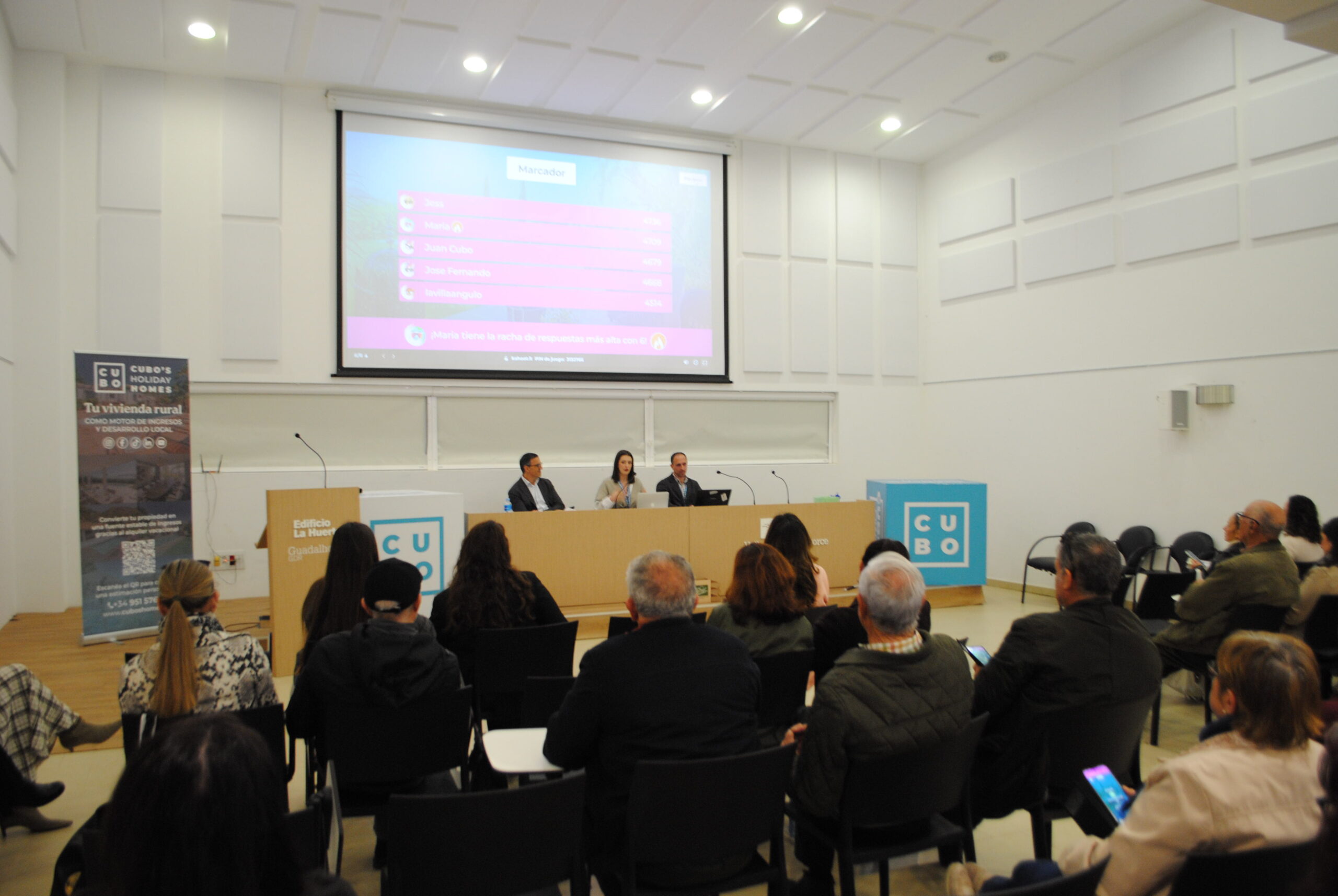
Following this initial networking session, we moved to the auditorium to begin the presentations. There, we shared real data, management tools, and strategies. In fact, these are already being successfully applied by more than 400 owners who work exclusively with us.

Why more and more owners are betting on rural vacation rentals
Rural tourism in the province of Málaga is experiencing significant growth, especially in areas like the Valle del Guadalhorce and the Sierra de las Nieves. There, an increasing number of travelers are seeking nature, tranquility, and entire holiday homes. For this reason, many rural properties have become a real opportunity to generate income year-round. However, the difference between a house that receives few bookings and one that achieves high occupancy usually lies in the management strategy, visibility on portals, pricing, and the guest experience. Precisely, these were some of the central topics of the event.
Event presentations: strategies to improve the profitability of a rural house
The person in charge of inaugurating the event and welcoming us was Félix Lozano, Mayor of Pizarra. We greatly appreciate his presence and support for the sector. During his speech, he spoke about the key role of tourism in the region and how it has been transforming the local economy in recent years. Following his introduction, the presentations by the different professionals began.
The impact of rural tourism on the territory
Juan Cubo, CEO & Founder of Cubo’s Holiday Homes, opened the session by analyzing the evolution of rural tourism in the Málaga province and the profile of today’s traveler. During his presentation, he explained how booking habits have changed, the average visitor spend, and the growing demand for rural accommodations in the province’s interior. Additionally, he highlighted the role of vacation rentals as an economic engine for the towns of the Valle del Guadalhorce, contributing to job creation, population retention, and the revitalization of local commerce.
Online visibility and guest experience
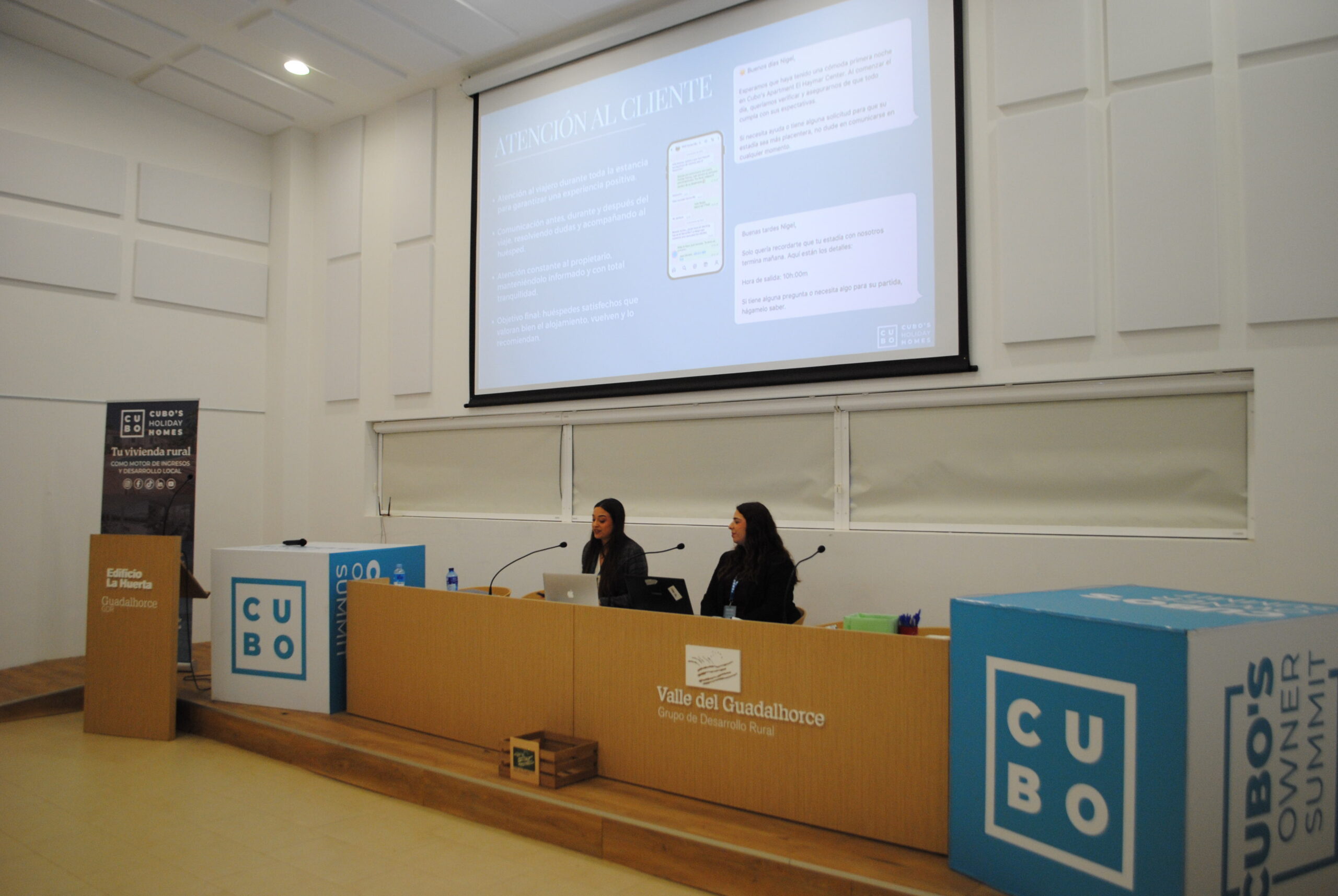
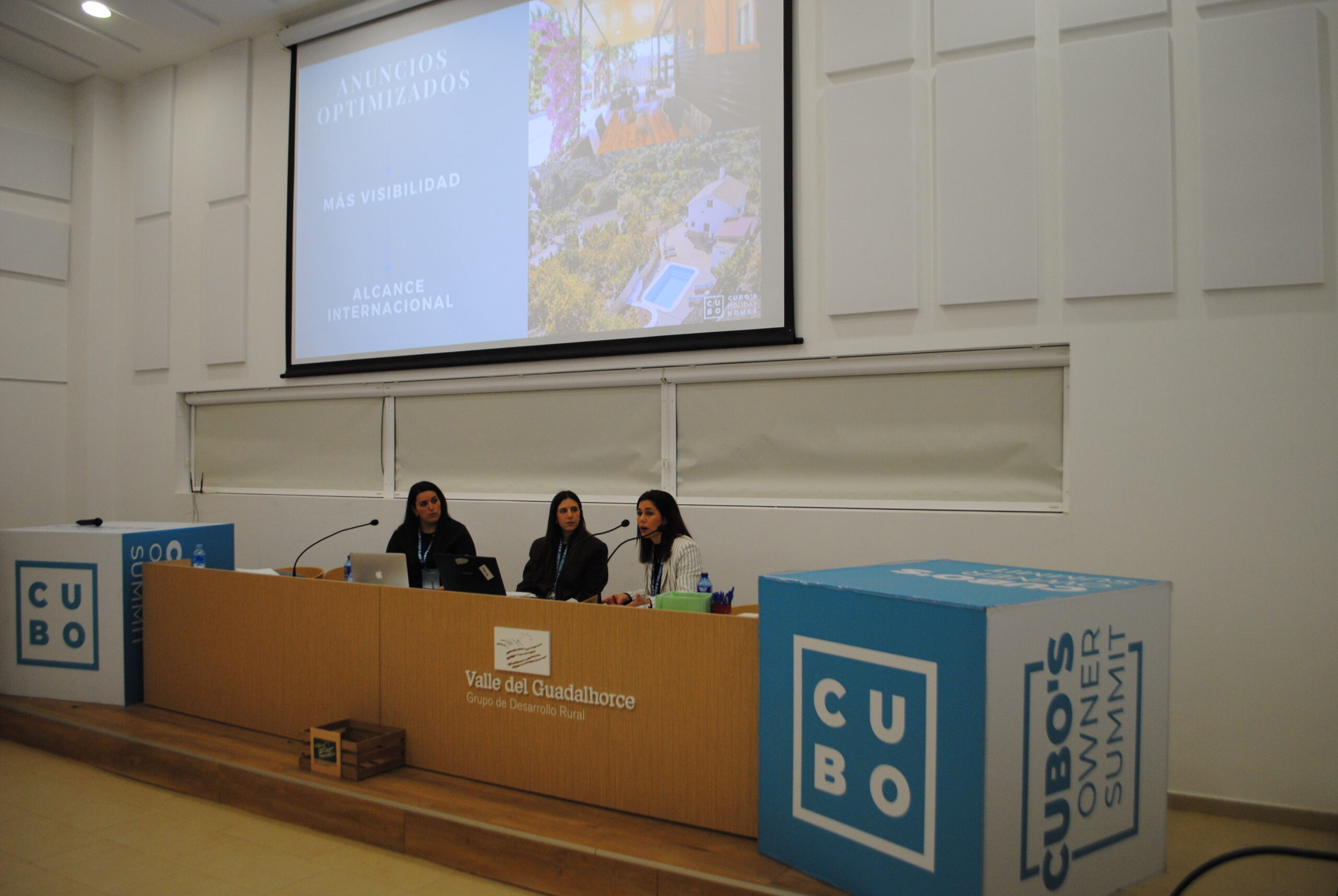
Paula Gómez and Natalia Gómez, from the Marketing and Customer Service Department, addressed one of the key factors in increasing bookings: the online visibility of tourist accommodations. They explained how professional photography and SEO optimization of listings improve a property’s ranking on platforms like Booking or Airbnb. Furthermore, they emphasized that fluid communication with the guest—before, during, and after the stay—impacts the final experience. They also showed real examples demonstrating how good reviews and customer service influence booking decisions.
The value of the territory and local products
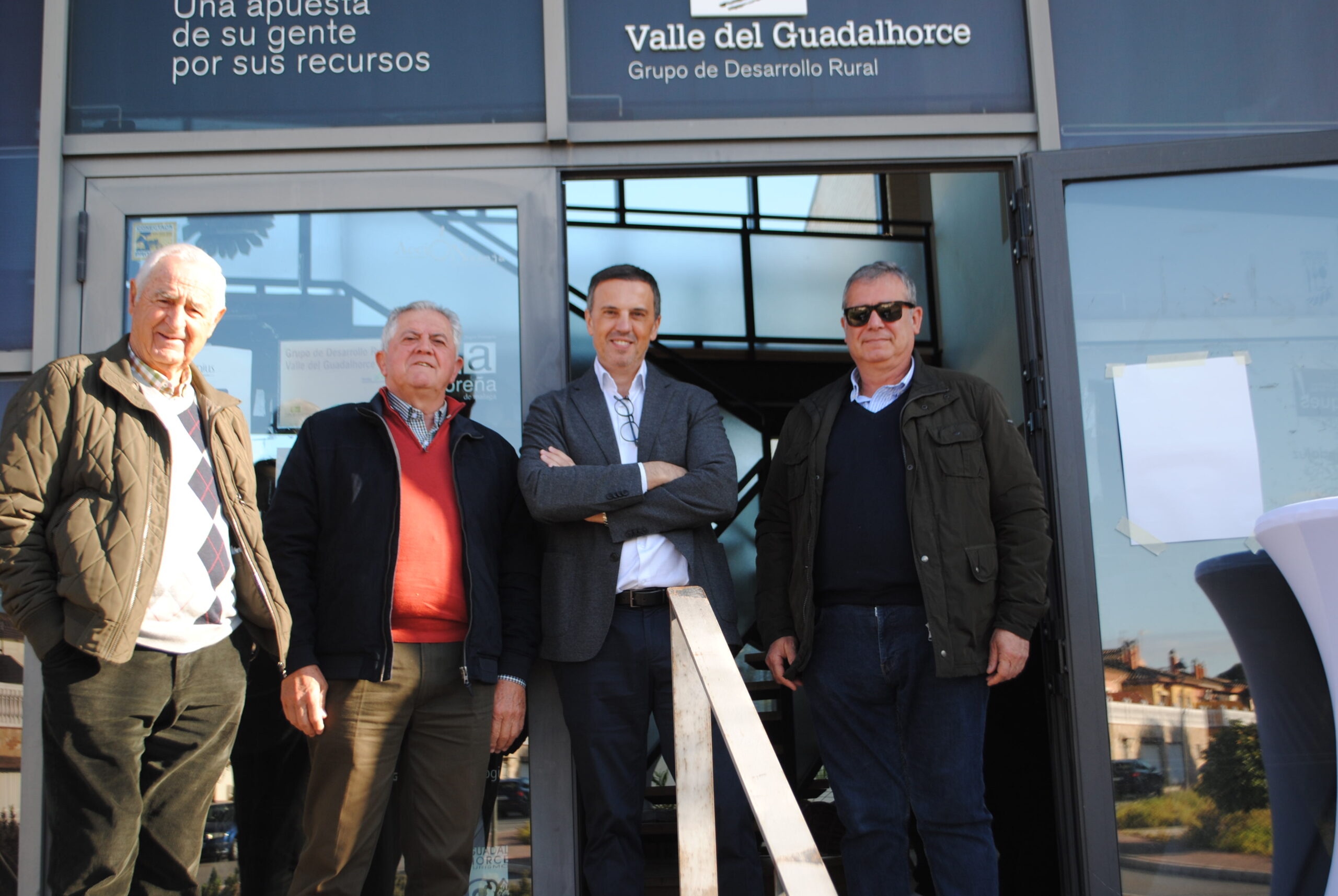
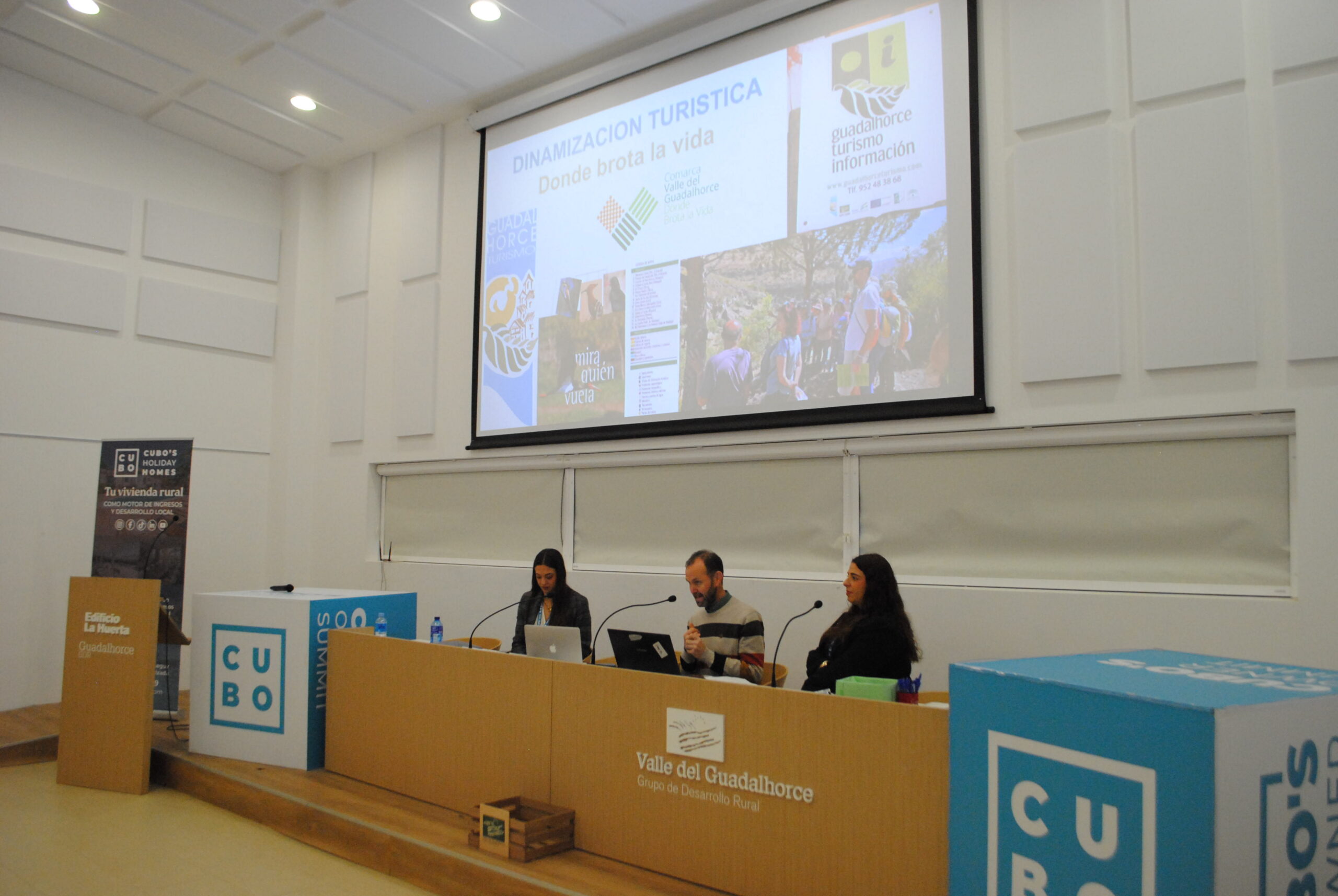
Sebastián Hevilla Ordoñez, manager of the Valle del Guadalhorce Rural Development Group, gave a presentation on territorial identity and the value of local products as a tourist attraction. During his exhibition, he highlighted emblematic local products such as the Tomate Huevo de Toro, Aceituna Aloreña, and Quesos de Málaga. Furthermore, he explained how the connection between agriculture, gastronomy, and tourism helps generate authentic experiences for visitors.
Tourism regulations in Andalusia for rural homes
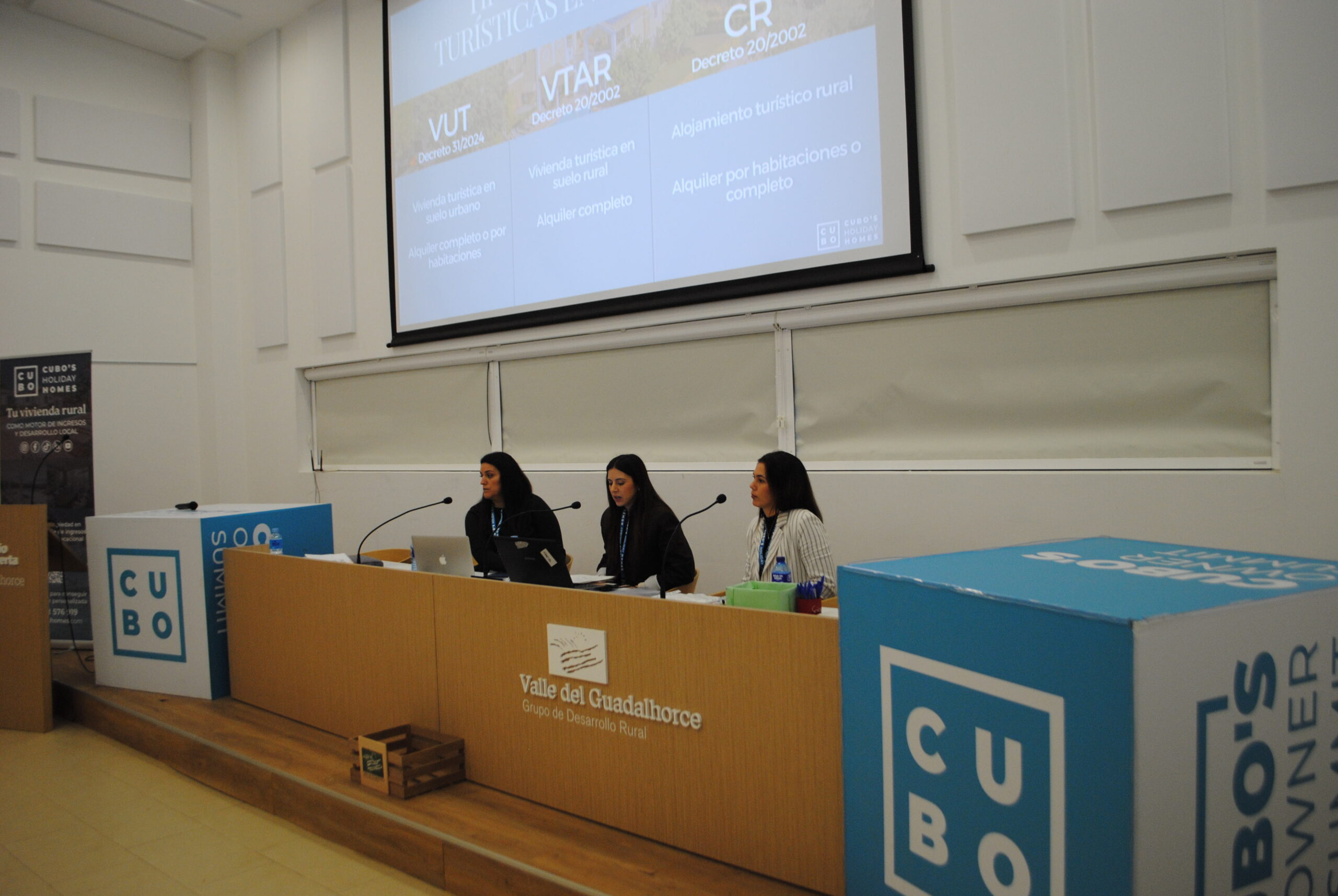
One of the topics that generated the most interest among attendees was the legal framework for vacation rentals. Marina Cubo, from the Legal Department of Cubo’s Holiday Homes, clearly explained the different types of tourist licenses existing in Andalusia: VUT, VTAR, and CR. She also detailed the requirements necessary to market a property legally. Finally, she addressed key aspects such as the NRUA registry and the obligation to report traveler data through the SES Hospedajes system.
Technology, distribution, and strategic alliances in vacation rentals
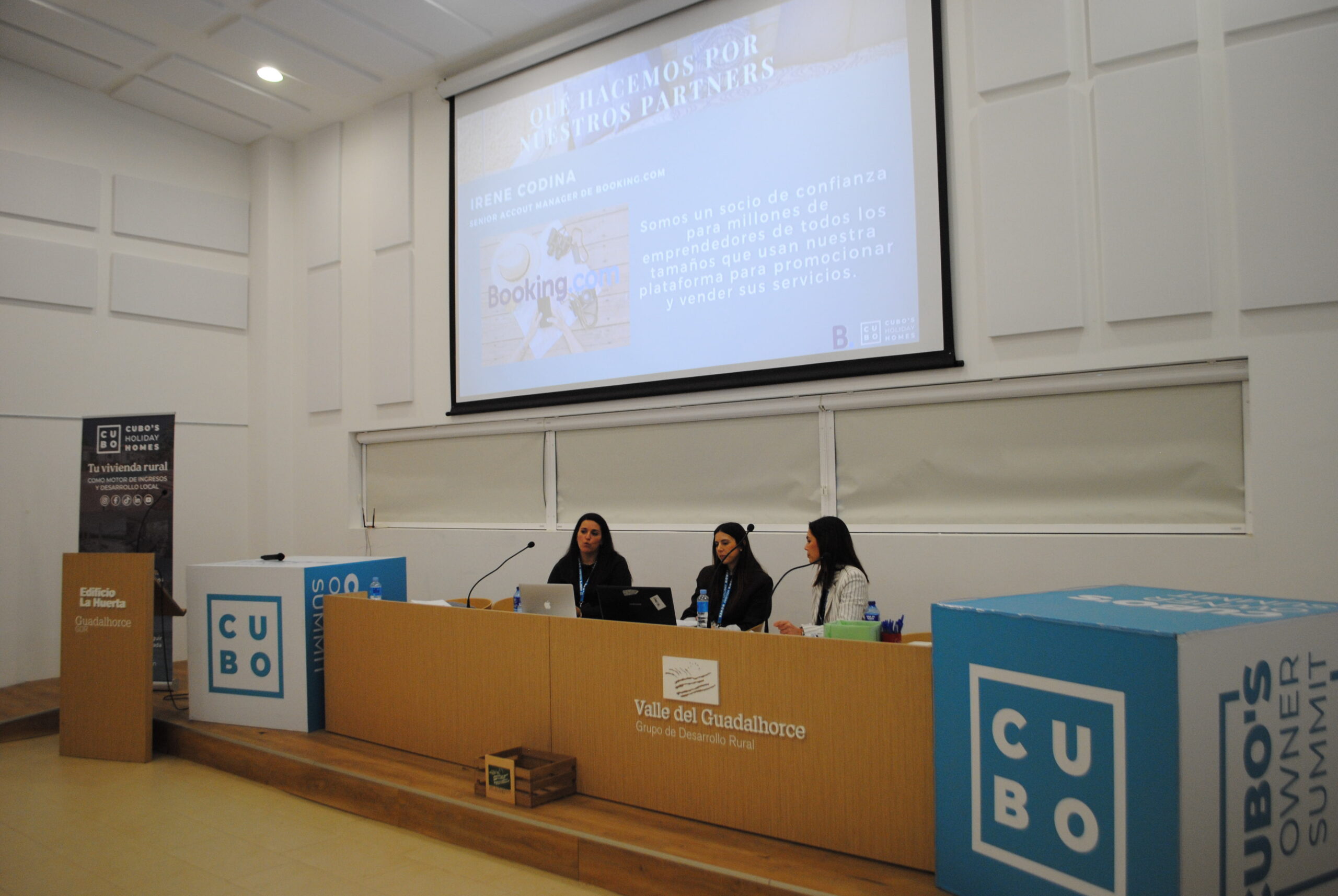
Beatriz García, from the Product Department at Cubo’s Holiday Homes, shared a segment with Irene Codina, Senior Account Manager at Booking.com. During this intervention, it was explained how major booking portals act as strategic allies. On the one hand, they provide international visibility to tourist accommodations. On the other, they help capture bookings based on market demand. Irene detailed how platforms like Booking connect travelers with accommodations worldwide. Additionally, she explained that small details in the property’s presentation and offered services can make a huge difference in the guest experience.
For her part, Beatriz delved into the role of the technological partners we use in the professional management of tourist homes. Among them, she highlighted Avantio for distribution and booking management, and Roomonitor for property control. She also explained how different marketing portals feed the booking strategy. Furthermore, she emphasized the importance of offering complementary experiences during the stay, thereby improving traveler satisfaction and adding value to the accommodation.
Dynamic pricing and tourism market analysis
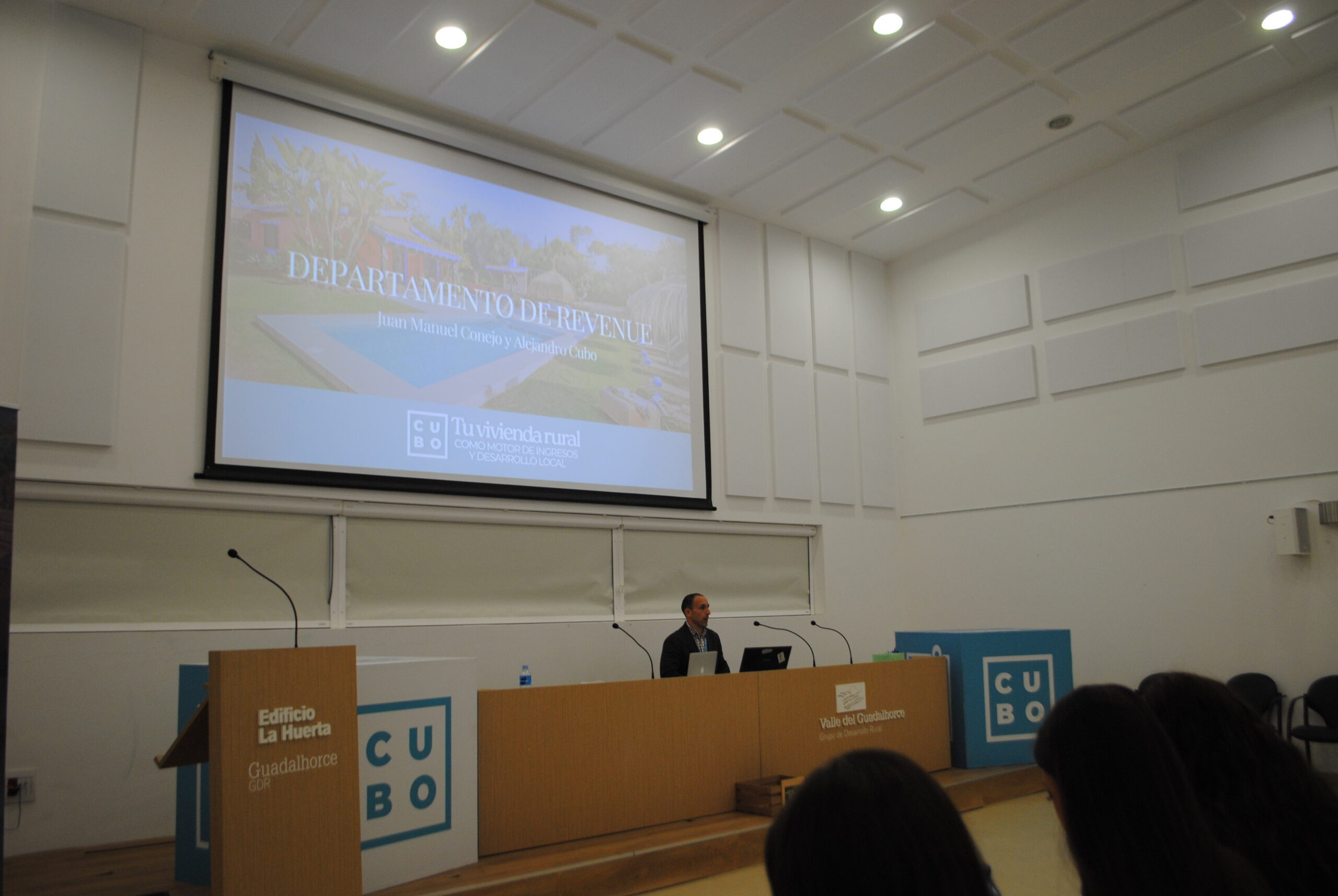
Juan Manuel Conejo, head of the Revenue Department, explained how the vacation rental market is analyzed in areas like the Valle del Guadalhorce or the Sierra de las Nieves. The goal is to establish dynamic pricing strategies. During his presentation, he showed how metrics such as occupancy, average daily rate (ADR), and average length of stay allow prices to be adjusted according to demand. This makes it possible to maximize the profitability of a tourist property.
Professional management and project growth
To close the day, Cristina Granados, from the Accounts Department, explained how the comprehensive management that Cubo’s Holiday Homes carries out for owners works. After a fun Kahoot! game with the attendees, she presented the company’s growth. Currently, it exceeds 400 properties managed exclusively. Additionally, she detailed the different services that allow owners to make their properties profitable while delegating operational management to a specialized team.
In summary, this event left us with a great lesson: rural tourism in the Valle del Guadalhorce has enormous potential. However, to stand out and be profitable, it is no longer enough just to publish an ad on the internet. It requires a clear strategy, excellent guest service, a good pricing policy, and solid legal backing.
Do you have a rural house in Málaga and want to improve its profitability?
As we saw during the event held in Cerralba, the profitability of a rural home does not depend solely on publishing it on the internet. Visibility on portals, pricing strategy, guest experience, and compliance with tourism regulations also play a role.
At Cubo’s Holiday Homes, we have been managing tourist homes for over 9 years. We currently work exclusively with more than 400 properties in the province of Málaga. Moreover, we help owners improve their income through professional management.
👉 If you want to know how much your property could generate, request a free profitability study for your accommodation.
Thank you to everyone who joined us and made this great gathering possible!
See you at the next event.
7 keys to making a rural house profitable that we learned at the event
1. Know today's traveler
Understanding who visits inland Málaga (profile, nationality, or type of stay) allows you to adapt the accommodation and improve your booking strategy.
2. Take care of the property's presentation
Professional photographs, good descriptions, and optimized listings increase visibility and generate more bookings.
3. Offer a good guest experience
Clear communication and good customer service before, during, and after the stay directly influence reviews.
4. Highlight the value of the rural environment
Gastronomy, local products, and nature activities help differentiate the accommodation.
5. Comply with tourism regulations
Having the appropriate license and meeting legal requirements is essential to operate with peace of mind.
6. Be present on the main portals
Proper distribution on international platforms increases the visibility of the accommodation.
7. Apply dynamic pricing
Adjusting rates according to demand and market behavior allows you to improve annual profitability.